
The Buzz About Bee Hive Maintenance in Florida
Beekeeping in Florida is a little like gardening in the jungle. Everything grows fast, the weather changes on a dime, and if you blink, something invasive has already moved in and made itself at home. That includes pests like small hive beetles and Varroa mites, two of the biggest threats to healthy hives in our Sunshine State. If you’re keeping bees here (or thinking about it), hive maintenance isn’t just a seasonal chore, it’s a survival strategy.
Why Florida Hives Are Especially Vulnerable
Florida’s warm, humid climate is paradise for bees but it’s also ideal for pests. Unlike colder regions where winter naturally knocks back parasite populations, Florida’s year-round warmth means pests can thrive nonstop. That means beekeepers have to be more vigilant, more often. Let’s break down the two biggest troublemakers:
1. Small Hive Beetles: The Uninvited Guests
Small hive beetles (SHBs) are opportunistic invaders that love weak or overcrowded colonies. Once inside, they lay eggs in the comb, and their larvae tunnel through honey, pollen, and brood, leaving behind a fermented, slimy mess that can collapse a hive.
Signs of SHB trouble:
Slimy, discolored comb
Fermented or sour-smelling honey
Beetles scurrying when you open the hive
How to fight back:
Keep hives strong and well-ventilated
Avoid excess space in the hive (SHBs love unused frames)
Use beetle traps or oil trays
Regularly inspect and clean bottom boards

2. Varroa Mites: The Silent Saboteurs
Varroa destructor mites are tiny, reddish-brown parasites that attach to bees and feed on their fat bodies. If left unchecked, they weaken individual bees, spread viruses, and can decimate entire colonies.
Why they’re dangerous:
Varroa mites don’t just harm bees directly, they open the door to viral infections, deformities, and colony collapse. And because they reproduce inside brood cells, they’re hard to spot until the damage is done.
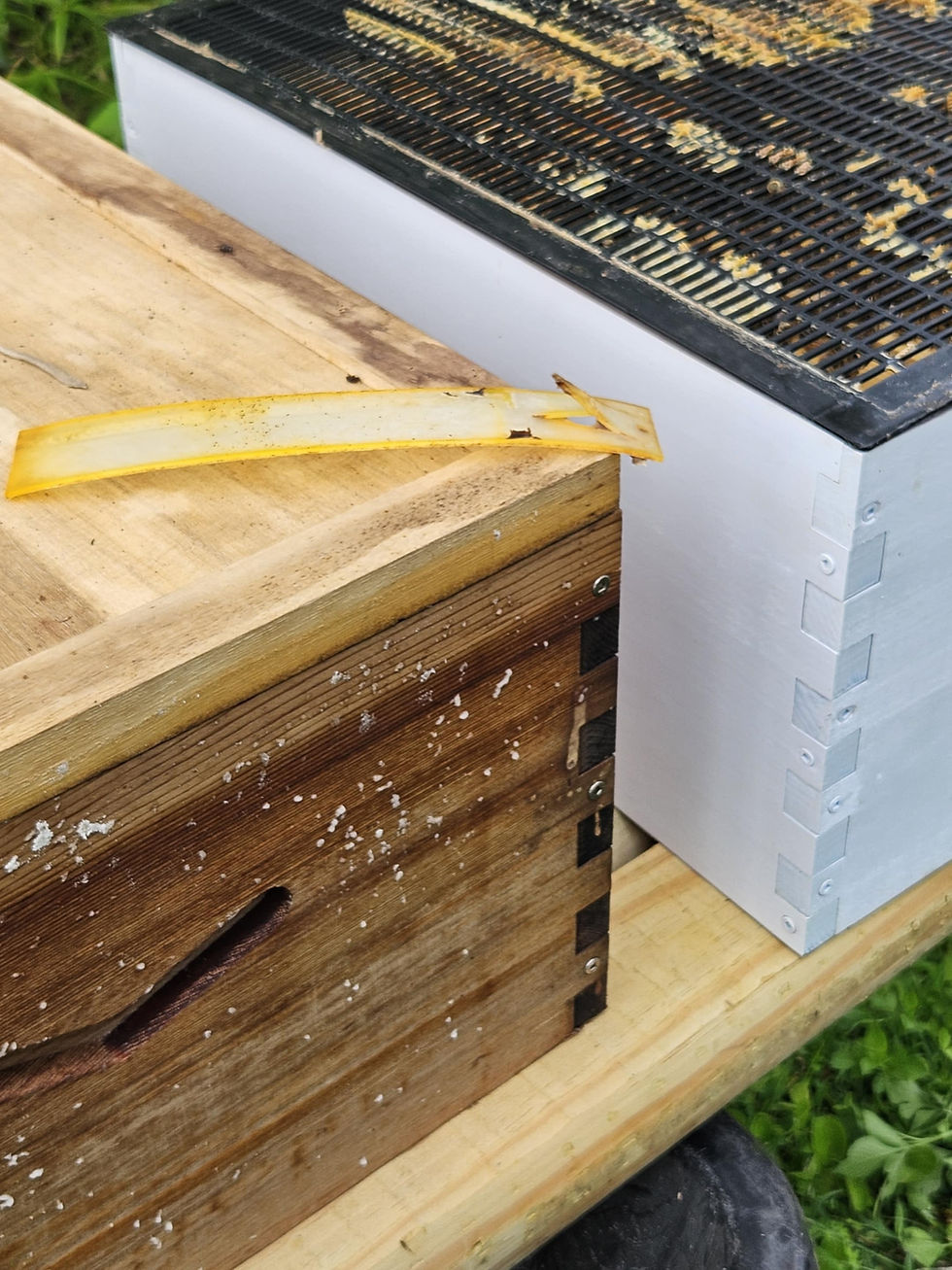
How to manage them:
Monitor mite levels regularly (sugar shake or alcohol wash)
Use integrated pest management (IPM) strategies (more on that in a future blog)
Rotate treatments to prevent resistance (formic acid, oxalic acid, thymol, etc.)
Breed or source queens from mite-resistant stock when possible
Hive Maintenance = Hive Resilience
Routine hive checks aren’t just about harvesting honey, they’re about reading the health of your colony. In Florida, that means checking for:
Pest pressure
Queen performance
Brood pattern
Hive ventilation and space usage
Signs of stress or disease
A strong, well-maintained hive is your best defense against pests. It’s also the foundation for a productive, sustainable apiary.

Final Thoughts from the Homestead
Beekeeping in Florida is a dance with nature and sometimes, with nature’s less charming side. But with regular maintenance, a sharp eye, and a little grit, you can keep your hives thriving and your bees buzzing. Because when we care for our bees, we’re not just protecting honey we’re protecting pollination, biodiversity, and the heartbeat of our homestead.


Comments